Sicily – the largest island in the Mediterranean sea with a typical Mediterranean climate and home to Mount Etna. This Italian province also finds a mention in Homer’s famous epic – Odyssey as the home of one of the most famous mythical monsters from Greek legend – The cyclops.


For those who have never read Greek mythology or Percy Jackson, the Cyclops are one-eyed humanoid giants. They are usually described to be strong, powerful but also gullible and not very witty. In the most popular version found in the Odyssey, the Cyclops are described as a band of giant, one-eyed, man-eating shepherds that lived on Eastern Sicily, where Odysseus and some of his men landed in search of supplies. They get captured by the giant Polyphemus who eats many of the men. The remaining men escape by getting the monster drunk and blinding him.

How could have stories of these giants originated in the first place? Palaeontology seems to provide an interesting answer to this question. The answer is associated with a particular type of fossil found in Sicily and other Mediterranean islands. Here is an image of it.

A strange looking skull bone with one big hole in the centre of the face. Cyclops skulls? No. They actually belonged to ancient elephant species such as the Deinotherium giganteum and the Palaeoloxodon falconeri that lived in these islands long before humans. The big hole in the middle is where the trunk is connected to the head. The ancient Greeks, almost all of whom would have never seen a real elephant, could have easily mistaken these skulls for a giant human skull with one big eye socket in the middle.
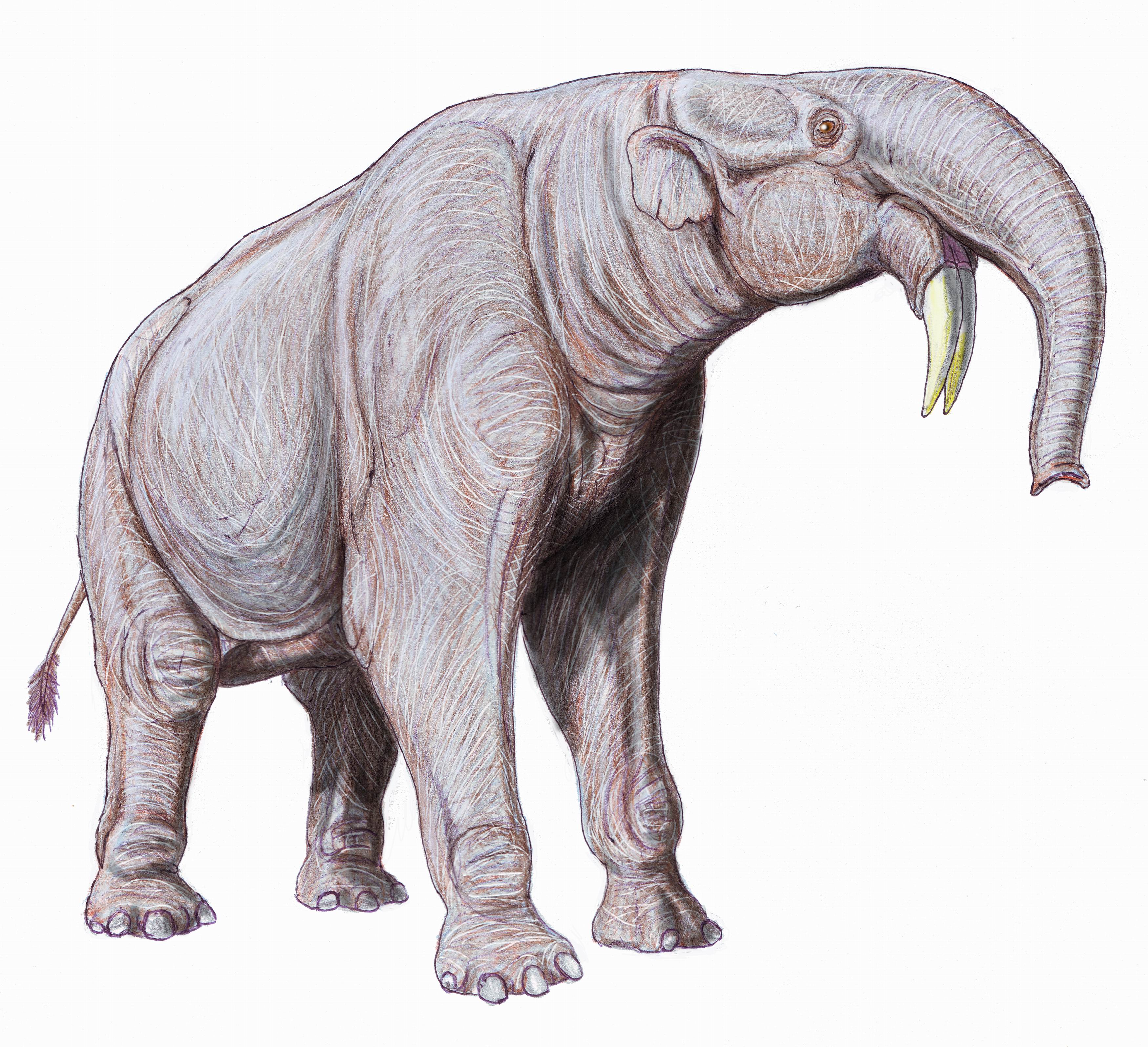
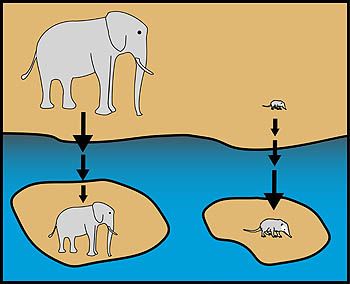
Deinotheriidae lived during the Miocene (23 to 5 million years ago) and Pliocene (5 to 1.8 million years ago) era in Europe, Africa and Asia. During these times, the sea levels were much lower than today, which would have allowed these elephants to swim to the islands from present-day Turkey. As sea-levels rised, most of these creatures were stuck on the islands. Over generations living on the island, Foster’s rule (island effect) came into play. Foster’s rule states that over generations, a species increases (or decreases) in size depending on the availability of resources in its environment. As the ancient elephants were stuck on the islands with limited resources, successive generations grew smaller in size. These ‘dwarfs’ had skulls smaller than other elephant species and the perfect size to be mistaken for a large humanoid skull.
Deinotheriidae had tusks that curl backward towards the mouth unlike the modern elephant tusks, which allowed the beast the dig up plants. These inward going tusks could have given the impression of canines which further support the idea of the elephant skulls being mistaken for cyclops skull.

Famous folklorist and historian of ancient science Adrienne Mayor first proposed this idea, which is still under debate. According to her, this type of fossil origin of mythical creatures is not something unique to the Cyclops. Many others such as the the Chinese dragon and the Griffin have their origins closely related to fossils of prehistoric creatures too. As California State University archaeologist Thomas Strasser’s words, “You’ll never be able to test the idea in a scientific fashion, but the ancient Greeks were farmers and would certainly come across fossil bones like this and try to explain them. With no concept of evolution, it makes sense that they would reconstruct them in their minds as giants, monsters, sphinxes, and so on”.
 Science Defined